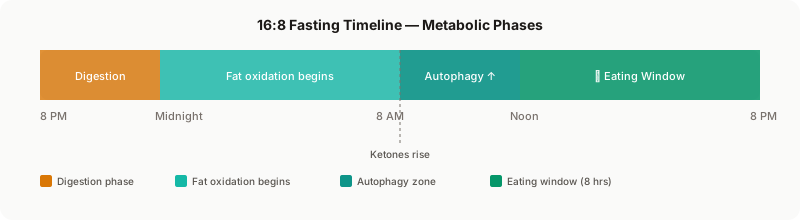
The 16:8 fasting method is the most studied and most widely practiced form of intermittent fasting. The premise: fast for 16 consecutive hours, then eat freely within an 8-hour window. That's it. No calorie counting, no food restrictions, no complicated meal plans.
The research behind 16:8 is substantial. Dr. Satchin Panda's time-restricted feeding (TRF) studies at the Salk Institute showed that limiting food intake to an 8-hour window, even without changing what participants ate, improved metabolic health markers including insulin sensitivity, blood pressure, and body composition.
How the 16:8 Method Works
Your body runs on two fuel modes: glucose (from carbohydrates) and fat (from adipose tissue and ketones). After a meal, blood glucose rises and insulin spikes to shuttle glucose into cells. As long as insulin is elevated, fat burning is suppressed, your body burns glucose first.
In a 16-hour fast, here's the timeline:
- Hours 0–4: Digestion and glycogen storage. Insulin is elevated.
- Hours 4–8: Blood glucose normalizes. Insulin drops. Fat oxidation begins.
- Hours 8–12: Liver glycogen depletes. Fat becomes the primary fuel.
- Hours 12–16: Ketone production begins. Autophagy accelerates. Growth hormone rises.
The 16-hour mark is significant because it consistently crosses into the autophagy window that shorter fasts miss. This is why 16:8 outperforms 12:12 (a common "unofficial" eating pattern) in most clinical comparisons.
Setting Up Your 16:8 Window
The most important decision is when to place your 8-hour eating window. The most common options:
Noon to 8 PM, The default for most people. Skip breakfast, eat lunch, eat dinner before 8. Compatible with work and social life.
10 AM to 6 PM, Works well for early risers and morning exercisers who need fuel before a workout.
1 PM to 9 PM, Good for people who work late or have late dinners with family. Slightly harder to maintain because 9 PM is close to sleep time.
To find your exact fast-end time, use our 16:8 fasting calculator. Enter your last meal time from the previous night, select the 16:8 protocol, and the calculator shows you precisely when your eating window opens. For example: last meal at 8 PM, 16:8 protocol → fast ends at noon the next day.
What the Research Says About 16:8
A 2020 randomized controlled trial in Cell Metabolism (Lowe et al.) compared 16:8 time-restricted eating to a standard 3-meal schedule in 116 adults with obesity. The 16:8 group lost significantly more weight and showed greater improvements in fasting glucose and blood pressure over 12 weeks, without any dietary restrictions on what they ate.
Dr. Satchin Panda's landmark mouse studies showed that mice restricted to eating within an 8-hour window had less fat mass, better glucose tolerance, and lived longer than mice with identical caloric intake but unrestricted meal timing. Follow-up human trials confirmed similar metabolic benefits.
Mark Mattson's research at the National Institute on Aging found that 16:8 fasting increases brain-derived neurotrophic factor (BDNF), which supports cognitive function and may reduce neurological disease risk.
Who Benefits Most from 16:8?
People with metabolic syndrome or pre-diabetes. The insulin-lowering effect of 16:8 is well-documented. Studies show fasting glucose improvements within 4–8 weeks.
Anyone who finds breakfast optional. Some people genuinely aren't hungry in the morning. For them, 16:8 isn't a restriction, it just formalizes what they're already doing.
People who do better with structure. Rather than deciding "how much should I eat today," 16:8 removes the morning eating decision entirely.
Those who want metabolic benefits without dietary overhaul. You don't change what you eat. You just move when you eat. The research shows meaningful benefits from timing alone.
Who Should Be Cautious with 16:8?
- People with a history of eating disorders (restriction patterns can be triggering)
- Pregnant or breastfeeding women
- Anyone on medications that require food
- Children and teenagers (not appropriate without medical supervision)
- People with Type 1 diabetes (blood sugar management is complex during fasting)
If any of these apply, talk to a healthcare provider before starting. Our About page outlines how we approach the science behind our tools.
Your First Week on 16:8
Day 1: You'll likely feel hungry around your usual breakfast time. This is conditioned hunger, your body expects food at that time out of habit. Drink water or black coffee. The feeling passes in 20–30 minutes.
Days 2–3: Hunger in the morning becomes less intense. Blood sugar swings decrease as your body stabilizes without morning glucose intake.
Days 4–7: Most people report improved morning focus and stable energy through the fasting window. The metabolic switch to fat-burning becomes more efficient with repetition.
Week 2: The fasting window feels unremarkable. The main challenge shifts to eating enough quality food within 8 hours, especially protein.
Practical Tips for 16:8
Don't start eating the second your window opens. There's no metabolic penalty for waiting until you're actually hungry. Many practitioners eat their first meal at 1–2 PM even when their window technically opens at noon.
Anchor your window to a fixed schedule. Fasting at the same times each day aligns with circadian rhythms and makes the hormonal benefits more pronounced. The Salk Institute's research specifically showed that circadian alignment (eating earlier in the day) amplified TRF benefits.
Eat two full meals, not constant snacking. Eating every 90 minutes within your 8-hour window doesn't give insulin enough time to clear. Two or three proper meals with 3–4 hour gaps between them allows for the insulin valleys that drive fat oxidation.
Track your window. Use our fasting window calculator each day to confirm your fast-end time. Enter the previous night's last meal time and you have your opening time instantly. This is especially useful when dinner runs late.
Comparing 16:8 to Other Protocols
16:8 hits the sweet spot between effectiveness and sustainability. Compared to 18:6 or 20:4, it produces slightly smaller metabolic changes but dramatically better adherence rates. Compared to 5:2 fasting (5 normal days, 2 very-low-calorie days), 16:8 avoids the intense hunger and social difficulty of near-total fast days.
For beginners, 16:8 is always the right starting point. Even experienced practitioners who try OMAD often come back to 16:8 as their long-term protocol because it's the only one that fits seamlessly into a normal life.
Curious about what you can and can't consume during your fast? Our guide on what breaks a fast covers every common question.
How Long Until 16:8 Feels Normal?
The most common question from people starting 16:8: when does it stop feeling hard? For most adults, the adaptation period is 10–14 days. Hunger that peaks in the first few days of skipping breakfast typically fades significantly by day 7–10 as the ghrelin response to your old eating schedule resets.
Energy and mental clarity during the fasting window often improve before hunger adapts. Many practitioners notice sharper focus in the morning by the end of the first week, even while still experiencing some hunger. By day 14, hunger during the fast is typically reduced to mild background awareness rather than an urgent signal.
If you're still finding 16:8 genuinely difficult at the 3-week mark, hunger that's affecting concentration or mood, step back to 14:10 for 2 more weeks and advance again. Some people's ghrelin adapts more slowly. There's no metabolic penalty for taking an extra few weeks to adapt. The protocol only works if you can maintain it.
Tracking Your 16:8 Window Accurately
The fasting clock starts at your last calorie, not your last "meal." A late-evening snack at 10:30 PM means your 8-hour eating window doesn't open until 2:30 PM the next day, not noon. This detail trips up many beginners who set a mental eating schedule based on an earlier meal.
Use our 16:8 fasting calculator each morning. Enter the exact time of your last bite from the previous day, select 16:8, and get your precise fast-end time. The 15-second habit prevents the single most common timing error in 16:8 fasting.