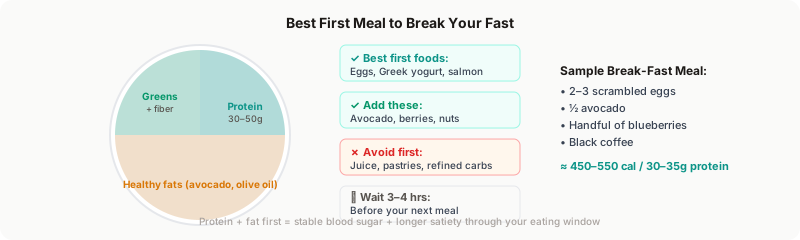
The meal that breaks your fast is the most important meal of your day. After 16–18 hours without food, your digestive system is quiet, your insulin is low, and your body is primed to respond intensely to whatever you eat first. What you choose determines whether the next few hours feel energized and controlled, or whether you spike blood sugar and crash.
Before we get to food choices: use our fasting calculator to confirm exactly when your eating window opens. Enter your last meal time and protocol, and the calculator tells you your precise fast-end time. From there, plan your first meal in advance.
Why the First Meal After Fasting Matters
After an extended fast, your body is in a heightened insulin-sensitive state. Cells are more responsive to glucose, this is one of the metabolic benefits of fasting. A protein-first, low-glycemic first meal preserves this benefit and extends the fat-oxidation state into your eating window. A high-sugar, high-refined-carb first meal spikes glucose rapidly and ends the fasted metabolic state abruptly.
Beyond metabolic concerns: what you eat first largely determines your satiety for the rest of your eating window. Protein and fiber eaten at the first meal activate satiety hormones (CCK, GLP-1, peptide YY) that slow hunger for 3–5 hours. A carb-heavy first meal provides quick energy but shorter satiety, leading to hunger again within 90 minutes.
The Best Foods to Break Your Fast
1. Eggs
Eggs are arguably the ideal first food after a fast. They're high in protein (6g per egg), contain leucine (the amino acid most responsible for triggering muscle protein synthesis), and have moderate fat content that slows digestion. Two to three eggs with some vegetables is a classic first meal that keeps blood sugar stable and satiety high.
Hard-boiled, scrambled, or fried in olive oil, all work. Avoid omelets loaded with processed cheese or heavy cream first thing, as the fat load can cause digestive discomfort after a long fast.
2. Greek Yogurt
Plain Greek yogurt (not flavored) provides 17–20g of protein per cup, probiotics for gut health, and moderate fat. It's easy to digest after a fast and doesn't cause the digestive stress that some people experience with red meat immediately after a long fasting period. Top with berries or a tablespoon of nut butter for a complete first meal.
3. Chicken or Turkey Breast
Lean poultry is a reliable protein source to break a fast, particularly for people who train fasted and need rapid amino acid delivery for muscle repair. 4–6 oz of chicken breast provides 35–45g of protein. Add a complex carbohydrate (rice, sweet potato) if you've just trained, or pair with vegetables for a leaner approach.
4. Avocado
Avocado alone isn't a meal, but as a complement to eggs or protein, it's excellent for breaking a fast. The monounsaturated fats in avocado slow gastric emptying, extend satiety, and support the fat-soluble vitamin absorption (vitamins A, D, E, K) that can be limited after an extended fast.
5. Berries
Berries, blueberries, strawberries, raspberries, are low glycemic index fruits with high fiber content. Unlike juice (which spikes blood sugar rapidly), whole berries deliver their sugar slowly alongside fiber and polyphenols. They're an excellent addition to the first meal, not as the sole food.
6. Salmon or Fatty Fish
Fatty fish provides both complete protein and omega-3 fatty acids (EPA and DHA). Omega-3s have anti-inflammatory properties that support recovery if you've trained fasted. 4 oz of salmon delivers 25g of protein and 2g of omega-3s. It's a slightly heavier first meal, so works better for a 16:8 lunch than for a light breaking-the-fast snack.
7. Nuts and Nut Butter
A small portion (1 oz almonds or 2 tbsp almond/peanut butter) is a good addition to the first meal. Nuts provide protein, healthy fats, and fiber. They're calorie-dense, so keep portions controlled, but the satiety signal they send is strong relative to their volume.
Foods to Avoid as Your First Post-Fast Meal
Refined sugar and juice: A glass of orange juice or a pastry as your first food after a 16-hour fast causes a rapid glucose spike and a corresponding insulin surge, the exact opposite of the metabolic state you've been maintaining. Save refined carbs for later in your eating window, if at all.
Large quantities of red meat: After an extended fast, a large portion of red meat can cause digestive discomfort. Your stomach acid and digestive enzymes need 15–20 minutes to ramp back up. A moderate serving (4–6 oz) is fine; a 16 oz steak at meal one is harder to digest.
Cruciferous vegetables (large amounts): Broccoli, cauliflower, and Brussels sprouts are excellent foods, but in large quantities as a first post-fast meal, they can cause significant bloating and gas, because your gut bacteria haven't been active during the fast. Start with a smaller serving.
Processed food breakfasts: Bagels, cereal, granola bars, "healthy" protein bars with sugar alcohols, all produce a suboptimal hormonal response as a first meal. They're quick to eat but poor at sustaining the metabolic state your fast created.
Structuring Your Eating Window After a Fast
A sample 16:8 eating window (noon–8 PM) with optimized meal structure:
Noon (Fast Break): 2–3 eggs scrambled in olive oil, half an avocado, a handful of blueberries, black coffee or water. (~450–550 calories, 30–35g protein)
3:30–4:00 PM (Second Meal): Chicken or salmon, 1 cup roasted vegetables, 1/2 cup rice or sweet potato. (~500–600 calories, 40–50g protein)
7:30 PM (Final Meal Before Window Closes): Greek yogurt with nuts, or a lighter protein + vegetable meal. (~300–400 calories, 20–25g protein)
Total eating window: ~1,300–1,600 calories, 90–110g protein. This fits a moderate deficit for a person in the 140–175 lb range.
Track your window with our intermittent fasting eating window calculator to confirm when to start and stop eating each day.
Breaking a Fast After Exercise
If you've trained fasted (common in 16:8, where many people work out in the late morning), your post-workout first meal should prioritize protein and fast-digesting carbohydrates:
- 30–50g protein immediately after training
- 30–60g fast carbohydrates (rice, banana, sweet potato) to replenish glycogen
- Skip heavy fats in this first meal, they slow amino acid absorption
Our guide on fasting and exercise covers the full timing strategy if you train in your fasting window.
How Long to Wait After Breaking Your Fast?
Wait 3–4 hours between your first meal and your second. This allows insulin to clear, returns you briefly to a lower-insulin state, and maintains the fat oxidation you were enjoying during the fast. Continuous snacking throughout your eating window prevents this insulin clearance and reduces the metabolic benefit of the fasting window.
Learn more about what's allowed during the fast itself in our guide on what breaks a fast, so you know exactly when your eating window is open and when it's not.
Adjusting Your First Meal Based on Fast Length
A 16-hour fast and a 20-hour fast warrant different first meals. After 16 hours, a standard protein-forward meal (eggs, Greek yogurt, a small piece of fruit) is appropriate and well-tolerated by most people. After 20 hours, your digestive system has been inactive longer, and a smaller, gentler first food is wise: 4 oz of plain Greek yogurt, a few almonds, or a small piece of chicken before the larger meal 30–45 minutes later.
After a 24-hour or longer fast, the same principle applies more strongly. Reintroduce food slowly, starting with something easy to digest, then eating your full first meal 30 minutes later. Rushing into a large meal after an extended fast is the most common cause of post-fast nausea and bloating.
Use the fasting calculator to plan your eating window timing, then use this guide to plan what goes into that window. Both the timing and the content of your eating window shape your results.