The most common concern people have when starting intermittent fasting and exercise together: "Will I lose muscle if I train fasted?" The short answer, based on current research, is: not if you're getting enough protein in your eating window.
This guide covers when to train on a fasting schedule, what types of exercise work best fasted, what the research says about fasted vs. fed training, and how to structure your eating window around workouts. Use our fasting calculator to build your schedule around your training.
The Key Question: Does Fasted Training Work?
Yes, with an important caveat. Fasted training increases fat oxidation during the workout. Studies consistently show that training in a fasted state (8+ hours after eating) burns more fat per unit of effort than fed training. A 2019 paper in the Journal of Nutrition found that fasted morning exercise increased fat oxidation by 20% compared to the same workout performed after breakfast.
However, total calorie burn over 24 hours is roughly equal between fasted and fed training when protein intake is matched. The advantage of fasted training is the preferential use of stored fat during the session, which matters for body composition goals.
The muscle-loss question. Cortisol (a stress hormone) rises during fasted exercise, which increases protein breakdown. However, multiple studies, including a 2016 meta-analysis by Trabelsi et al., found no significant difference in lean mass retention between fasted and fed training groups when protein intake was adequate (0.7–1g/lb/day). The muscle isn't lost during the workout, it's preserved or rebuilt during the eating window, provided you eat enough protein.
Best Exercise Types for Fasted Training
Low to moderate intensity cardio: Fasted low-intensity cardio (walking, cycling, light jogging at 50–65% max heart rate) is ideal for fat burning without the performance penalty. These intensities rely heavily on fat oxidation, which is already elevated during fasting.
Strength training: Fasted weight training is effective for most people with training experience. Beginners may find performance drops early in their fasting practice, but this adapts within 2–4 weeks as the body improves fat utilization efficiency.
High-intensity intervals (HIIT): HIIT is more demanding fasted. Performance can drop 5–10% at first, particularly in the later sets or intervals. If your priority is performance (not fat burning), consider HIIT within your eating window instead.
Long-duration endurance (90+ minutes): Long runs or rides fasted work well up to about 90 minutes if you're fat-adapted. Beyond that, glycogen depletion can cause performance collapse. If you're training for distance events, consume electrolytes and plan carefully.
Timing Your Workout With Your Fasting Window
There are three optimal timing strategies:
Strategy 1: Train Just Before Your Eating Window Opens
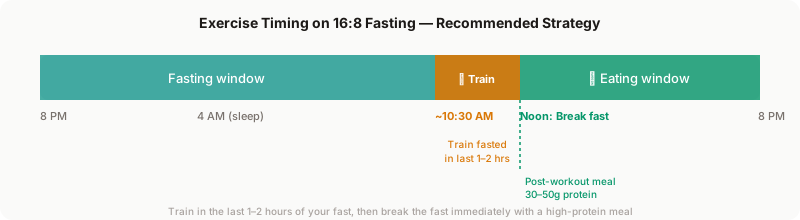
This is the most popular approach for 16:8. Train in the last 1–2 hours of your fast, then break your fast immediately post-workout with a protein-rich meal. You get the fat-oxidation benefits of fasted training and the anabolic benefits of protein right when muscle protein synthesis is highest (30–60 minutes post-workout).
Example: Eating window is noon–8 PM. Train at 10:30–11:45 AM. Break fast at noon with a high-protein meal. Use our fasting schedule calculator to confirm your window, enter your previous night's last meal time with 16:8 selected.
Strategy 2: Train at the Start of Your Eating Window
Eat a small pre-workout meal (carbs + protein, 200–300 calories) as soon as your window opens, wait 45–60 minutes, then train. Best for strength athletes or anyone who performs significantly better with fuel.
Strategy 3: Train Mid-Eating Window
If you train at 5–6 PM and your window is noon–8 PM, you've eaten 1–2 meals before training. Performance will be at its best, but you forgo fasted fat-oxidation benefits. This is the right choice for competitive athletes prioritizing performance over body composition optimization.
What to Eat After a Fasted Workout
Your post-workout meal is the most important meal of the day when you train fasted. Muscle protein synthesis peaks in the hour after training and remains elevated for 24–48 hours. Prioritize:
- Protein: 30–50g in the first meal post-workout. Chicken breast, eggs, Greek yogurt, cottage cheese, or whey protein.
- Carbohydrates: 30–60g to replenish glycogen, especially after intense sessions. Rice, sweet potato, or fruit.
- Fat: Keep the immediate post-workout meal lower in fat (fat slows gastric emptying and delays amino acid absorption).
Read our full guide on the best foods to break your fast, the same principles apply to post-workout nutrition.
Managing Performance on a New Fasting Schedule
Expect a 1–2 week adaptation period when you start combining IF with exercise. During this window:
- Strength may drop slightly (5–10%) on fasted workouts
- Cardiovascular endurance may feel more difficult
- Focus and mental sharpness during fasted workouts often improve (mild ketone production enhances mental clarity)
After 2–4 weeks, most people report that fasted workouts feel similar to or better than fed workouts, particularly for low-to-moderate intensity sessions.
Electrolytes During Fasted Training
Extended fasting depletes sodium, potassium, and magnesium, electrolytes that are critical for muscle function and performance. If you're training during a long fast:
- Add 500–1,000mg of sodium to your water (a pinch of sea salt works)
- Consider a sugar-free electrolyte supplement
- Magnesium (250–400mg) taken the night before helps with muscle function
Key Takeaways
- Fasted training increases fat oxidation during the session without causing muscle loss, if protein intake is adequate
- Train in the last 1–2 hours of your fast and break it with a protein-rich meal for optimal results
- Low-to-moderate intensity exercise works best fasted; HIIT and max-effort training may see a small performance drop initially
- Electrolytes matter more when training fasted
- Use our intermittent fasting calculator to build your eating window around your training schedule
For beginners figuring out their IF schedule, our intermittent fasting beginner's guide covers the foundation before adding the training variable.
Resistance Training Fasted: What the Data Actually Shows
The concern about muscle loss during fasted resistance training is largely overstated when protein intake is adequate. A 2014 study by Schoenfeld et al. in the Journal of the International Society of Sports Nutrition placed trained men on either fasted or fed resistance training for 8 weeks. Both groups gained similar lean mass and lost similar fat, with no statistically significant differences in muscle retention. The key variable was that both groups consumed adequate protein (roughly 1g per pound of body weight per day).
The practical takeaway: fasted resistance training is fine for muscle retention if your total daily protein is adequate. The timing of that protein relative to training matters less than hitting your daily total. If your training window falls in the fasting period, the meal you break your fast with is effectively your peri-workout nutrition.
Cardio Timing: Morning vs. Evening Fasted Workouts
Morning training during a 16:8 fast (e.g., working out at 10–11 AM before a noon eating window) is the most popular timing and works well for most people. Fat oxidation is elevated in the morning regardless of fasting due to lower morning insulin levels.
Evening fasted training (training at 6–7 PM before a late eating window closes at 8 PM) produces similar fat oxidation benefits and has the advantage of post-workout meal timing being easier to arrange. Either approach works. Choose the timing that fits your schedule rather than optimizing for a marginal difference in fat burning between morning and evening.
Use the fasting window calculator to map your workout window to your eating schedule visually before committing to a routine.