The majority of intermittent fasting research has been conducted on men or in mixed groups where male results dominate the averages. Women's hormonal biology responds differently to caloric restriction and fasting stress, and ignoring that difference leads to protocols that don't work or actively cause harm.
This guide covers what's actually different about IF for women, what the research shows, which protocols are more appropriate, and what warning signs to watch for. Use our fasting calculator to plan your eating window and track your fasting hours.
Why Women's Bodies Respond Differently to Fasting
Women's reproductive hormones, particularly estrogen and progesterone, are sensitive to energy availability. This is an evolutionary adaptation: the female body is attuned to whether adequate calories are available to support reproduction. Severe caloric restriction or aggressive fasting can trigger hormonal disruptions that men simply don't experience.
The specific mechanism involves kisspeptin neurons in the hypothalamus. These neurons regulate GnRH (gonadotropin-releasing hormone) pulsatility, which drives the hormonal cascade that produces the menstrual cycle. Caloric restriction and low energy availability suppress kisspeptin signaling, which can reduce LH (luteinizing hormone) and disrupt ovulation.
Animal research (Garaulet et al., 2020) found that female rats on aggressive fasting protocols showed disrupted estrous cycles and reduced fertility. Human data is more limited, but clinical reports and smaller studies suggest some women experience irregular cycles, reduced cycle length, or amenorrhea (absence of periods) on extended fasting protocols, particularly 18:6, 20:4, and OMAD.
What the Research Actually Shows in Women
The existing research is more reassuring than the anecdotes suggest, for moderate protocols:
A 2022 systematic review in Nutrients found that 16:8 time-restricted eating in women produced significant weight loss and metabolic improvement without documented hormonal disruption in most participants. Crucially, the women in these studies were eating adequate calories during their eating window.
The risks appear concentrated in:
- Women who combine aggressive fasting (18+ hours) with significant caloric restriction
- Women with low body fat or already low energy availability (endurance athletes, in particular)
- Fasting during high-stress periods (cortisol compounds the hormonal suppression)
- Women with a history of hypothalamic amenorrhea
For most healthy adult women, 16:8 with adequate caloric intake is considered safe based on current evidence.
Which IF Protocol Is Best for Women?
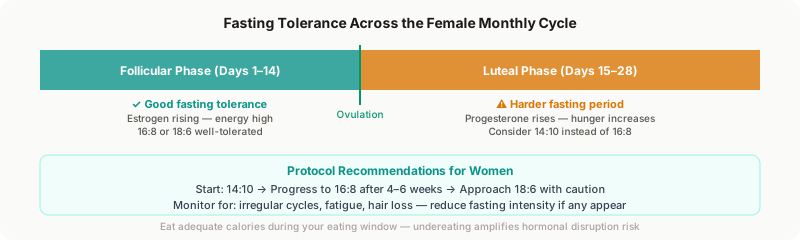
Start with 14:10, not 16:8. A 14-hour fast with a 10-hour eating window is a gentler entry point for women. This allows the metabolic benefits (reduced insulin, improved fat oxidation) without the more aggressive hormonal signals associated with 16+ hour fasts. After 4–6 weeks of successful 14:10, transition to 16:8 if desired.
16:8 is appropriate for most women after adaptation. The key condition: eating adequate calories (at or near TDEE) during the 8-hour window. Women who use IF as an excuse to eat very little are combining two stressors, which amplifies hormonal disruption.
18:6 requires caution. Some women thrive on 18:6. Others see cycle disruptions within a few months. If you try 18:6, monitor your cycle length and energy levels carefully. Any significant changes, irregular periods, loss of period, sudden fatigue, mood changes, suggest your body is finding the protocol too stressful.
OMAD is not recommended for most women without medical supervision. The 23-hour fast is too aggressive for many women's hormonal systems, particularly during reproductive years.
Adapting Your Protocol to Your Cycle
Many women find that their tolerance for fasting varies across their cycle:
Follicular phase (days 1–14): Estrogen is rising, insulin sensitivity is high, and energy is typically good. This is the best time to fast. 16:8 or even 18:6 is often well-tolerated here.
Ovulation (around day 14): Energy peaks. Fasting tolerance is usually high. Good time for training fasted.
Luteal phase (days 15–28): Progesterone rises, metabolic rate increases by 100–300 calories per day, and hunger increases. Many women find strict fasting harder here and experience more irritability, fatigue, and cravings. Consider a modified approach: 14:10 instead of 16:8, or eating slightly more during the eating window.
Menstruation (days 1–5): Hormone levels are at their lowest. Some women find fasting uncomfortable during this time. Listen to your body, it's fine to take 1–5 days off strict fasting.
Warning Signs to Watch For
Stop or reduce fasting intensity if you notice:
- Irregular menstrual cycles (cycles shorter than 21 days or longer than 35 days)
- Missed periods (especially after 2+ consecutive months)
- Extreme fatigue disproportionate to what you'd expect
- Hair loss
- Cold intolerance
- Worsening mood, anxiety, or depression
- Disordered eating thoughts or restriction-bingeing cycles
These signs suggest your body is under too much stress from fasting, caloric restriction, or both. A healthcare provider can check hormonal markers (LH, FSH, estradiol, thyroid) if you're concerned.
Practical Tips for Women Doing IF
Eat enough. This is the single most important point. IF isn't a synonym for "eating very little." Your eating window should contain your full TDEE, roughly 1,600–2,000 calories for most adult women, depending on activity level.
Prioritize protein. Getting 100–130g of protein per day supports muscle retention and keeps satiety hormones (leptin, peptide YY) appropriately elevated. Low protein intake is associated with stronger hunger during fasting, which creates a negative cycle.
Sleep counts. If you last eat at 8 PM and wake at 6 AM, that's already 10 hours fasted. For a 14:10 protocol, you only need to wait until 10 AM to eat. Don't force unnecessary fasting beyond what aligns with your schedule and sleep.
Track your window, not your calories. Use our fasting calculator for women to plan your eating window. Enter your last meal time and select your protocol, you'll see exactly when your window opens. The goal is consistency in timing, not aggressive restriction.
For more on getting started, read our intermittent fasting beginner's guide, and learn about the common mistakes that slow progress, many of which are especially relevant for women. You can also learn more about how we approach the evidence for our recommendations on our About page.
Does Intermittent Fasting Affect Fertility?
The honest answer: it depends on severity and caloric intake. Moderate IF (16:8 with adequate calories) is not shown to impair fertility in healthy women in the current literature. Aggressive protocols combined with caloric restriction are a different matter.
The hypothalamic-pituitary-ovarian (HPO) axis is sensitive to energy availability, not specifically to fasting timing. Women who eat enough calories during their eating window while doing 16:8 are not putting their HPO axis under additional stress. The problem arises when fasting becomes a vehicle for eating very little, suppressing total energy intake below the threshold that supports normal hormonal function.
If you're trying to conceive, the conservative recommendation from most reproductive endocrinologists is to avoid extended fasting protocols and maintain a normal meal frequency. Once pregnant or breastfeeding, fasting is not recommended.
Supplements That Support Women Doing IF
A few supplements can help women navigate the nutritional demands of intermittent fasting. Magnesium glycinate (200–400mg before bed) supports sleep quality and reduces muscle cramping, both of which can worsen during early fasting adaptation. Iron monitoring is worth discussing with your doctor if you experience fatigue, since fasting schedules can sometimes reduce iron absorption depending on meal composition. Omega-3 fatty acids (1–2g EPA/DHA daily) support hormonal balance and reduce the inflammatory response that some women notice when starting a new eating pattern.
None of these supplements are required for 16:8 success, but they address the specific gaps that women on IF protocols commonly report.